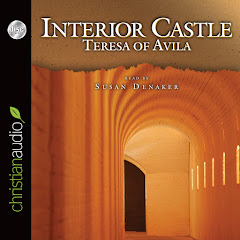
Interior Castle
Teresa of Avila
2007년 5월 · Christian Audio
star
리뷰 2개
headphones
오디오북
7시간 29분
원본
family_home
적용 가능
info
무료 49분 샘플을 들어 보고 싶으신가요? 오프라인일 때를 비롯해 언제든지 들을 수 있습니다.
추가
오디오북 정보
WHILE I was beseeching Our Lord to-day that He would speak through me, since I could find nothing to say and had no idea how to begin to carry out the obligation laid upon me by obedience, a thought occurred to me which I will now set down, in order to have some foundation on which to build. I began to think of the soul as if it were a castle made of a single diamond or of very clear crystal, in which there are many rooms, just as in Heaven there are many mansions. // Thus begins Teresa of Avila’s Interior Castle, one of the most celebrated books ever written by a mystic on abiding in union with Christ. Writing in obedience to the requests of two of her superiors, the humble 16th century Spanish sister protests “...for the love of God, let me get on with my spinning and go to choir...like the other sisters...I am not meant for writing; I have neither the health nor the wits for it.” // However, in her pre-coffee-house conversational style, Teresa of Avila charmingly proves to her readers that she does have the wits for conveying that “the most essential thing is that we should love God..." as she takes us by the hand and lead us on a visually beautiful spiritual journey into the soul, that Interior Castle where Christ abides, and where we may abide with Him in holy, intimate communion.
WHILE I was beseeching Our Lord to-day that He would speak through me, since I could find nothing to say and had no idea how to begin to carry out the obligation laid upon me by obedience, a thought occurred to me which I will now set down, in order to have some foundation on which to build. I be...
콘텐츠 둘러보기
평점 및 리뷰
리뷰 2개
저자 정보
At the age of seven, Teresa ran away from her home in Avila, hoping to be martyred at the hands of the Moors. As a teen, she secretly enjoyed reading novels of chivalry. Taught by Augustinian nuns, Teresa acquired a sense of religious vocation only gradually. Deciding to become a nun, she professed as a Carmelite of Avila in 1537. Although she became ill to the point of having wax applied to her eyes in preparation of death, she did not die, but she did leave the convent. Teresa later returned to the convent and, upon reading St. Augustine's Confessions, experienced a conversion at the age of 40. When she experienced visions and heard voices, she wondered at first if it was the work of the devil. She found comfort in Peter of Alcantara's assessment that her experiences were of a divine origin. Life as a Carmelite nun tended to be comfortable, but not dissolute. Inspired by her mystical experiences, Teresa took practical steps to reform the Carmelite order. In 1562 she founded a convent with a stricter regime of discipline than was common. She also organized a Discalced Carmelite monastery for men. In doing so, she met Juan de Yepes y Alvarez, known to us as the mystic St. John of the Cross, who became a fellow reformer. In all, she founded 16 reformed convents. Teresa's spirituality cannot be characterized in a word, but humility rather than honor was at its center. Her life of contemplation led to active service. Upon her death in 1582, her body remained preserved. This, along with other signs of saintliness, led to her canonization in 1622. In 1970, she was declared a "Doctor of the Church," the first woman in the history of the Catholic church to receive that honor.
At the age of seven, Teresa ran away from her home in Avila, hoping to be martyred at the hands of the Moors. As a teen, she secretly enjoyed reading novels of chivalry. Taught by Augustinian nuns, Teresa acquired a sense of religious vocation only gradually. Deciding to become a nun, she profess...
오디오북 평가
의견을 알려주세요.
오디오북을 듣는 방법
스마트폰 및 태블릿
노트북 및 컴퓨터
Google Play에서 구입한 도서를 컴퓨터의 웹브라우저로 읽을 수 있습니다.


